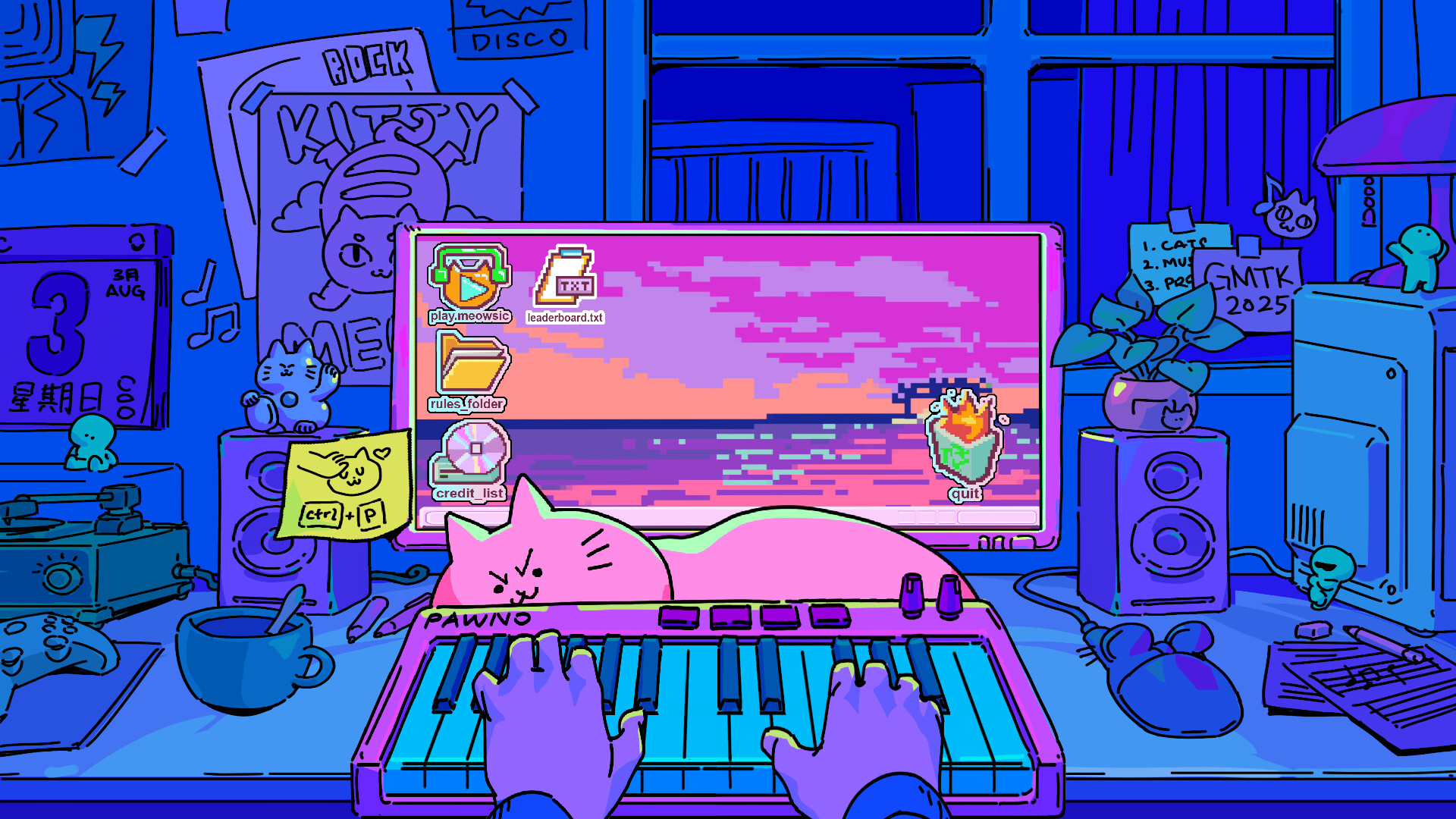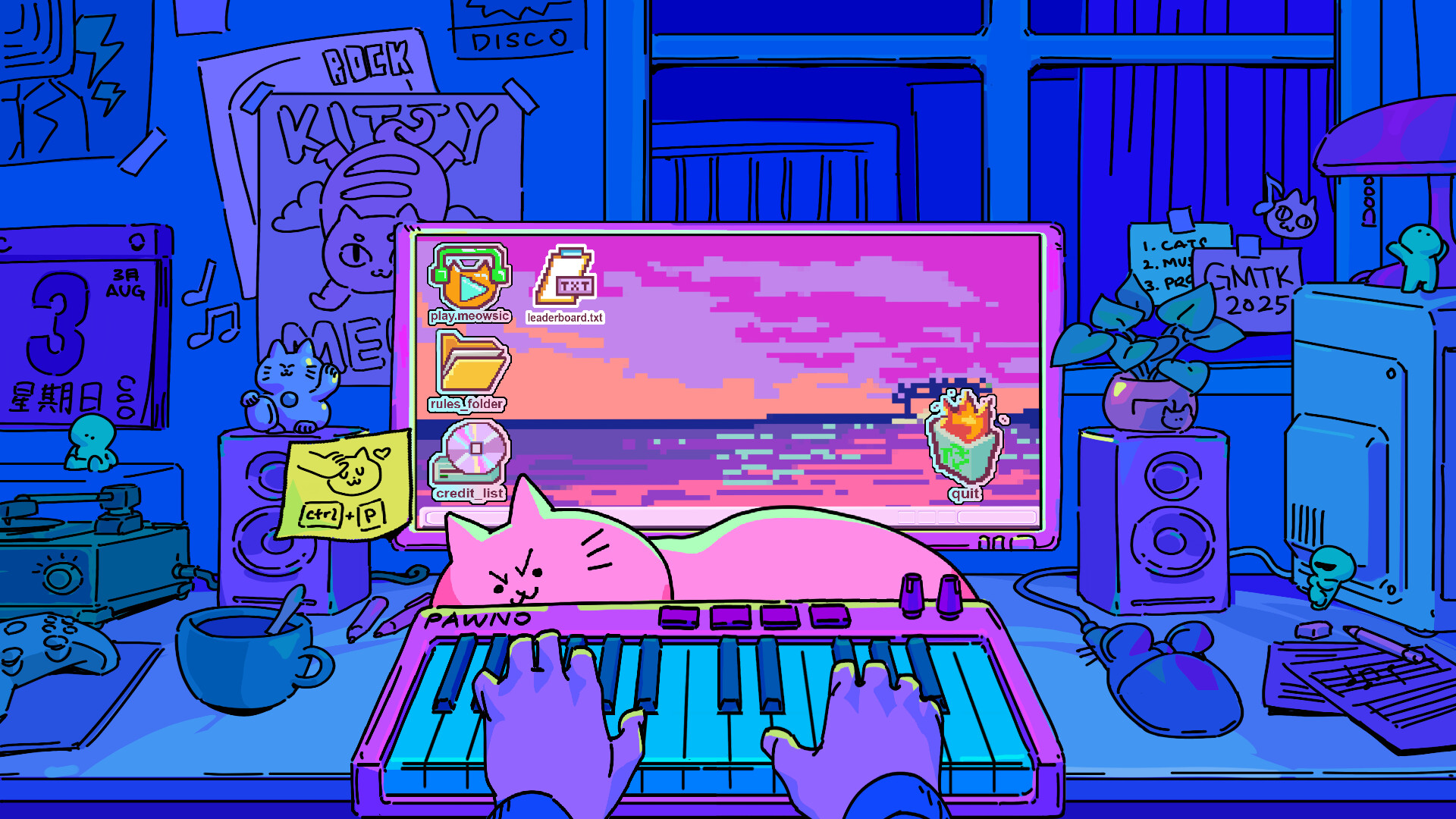
Creating a rhythm‑based platformer in Unreal Engine 5 isn’t the obvious route, UE5 is known for cinematic 3D worlds, not 2D rhythm games. But for Meowsic, it became the perfect playground for tight controls, expressive animation, and music‑driven gameplay.
The biggest challenge was syncing responsive platformer movement with musical timing. The game needed to feel great even if players ignored the beat, while still rewarding those who naturally fell into the rhythm. That balance shaped almost every system we built.
We developed Meowsic entirely in C++, giving us the precision and performance needed for rhythm‑sensitive gameplay. For animation, we used PaperZD, which let us build fluid, hand‑crafted 2D animations and later expand into custom animation systems as the project grew.
Level design became its own puzzle. Each stage is effectively a music track visualised as a platforming space, platforms, hazards, and collectibles all map to the structure of the underlying song. It’s part rhythm game, part level editor, part platformer.
We’re still refining the feel of the rhythm mechanics. The goal is for players to slip into the beat naturally, without the game ever feeling rigid or punishing. Every new build gets us closer.
A Behind‑the‑Scenes Look (Video Preview)
If you want to see how Meowsic actually came to life, we’ve put together a short devlog showing the earliest jam version, brainstorming the GMTK 2025 theme “Loop”, building the cat’s behaviour, experimenting with camera systems, and shaping the rhythm‑driven movement.
It’s a fun, fast look at the messy, creative side of development.
Share